
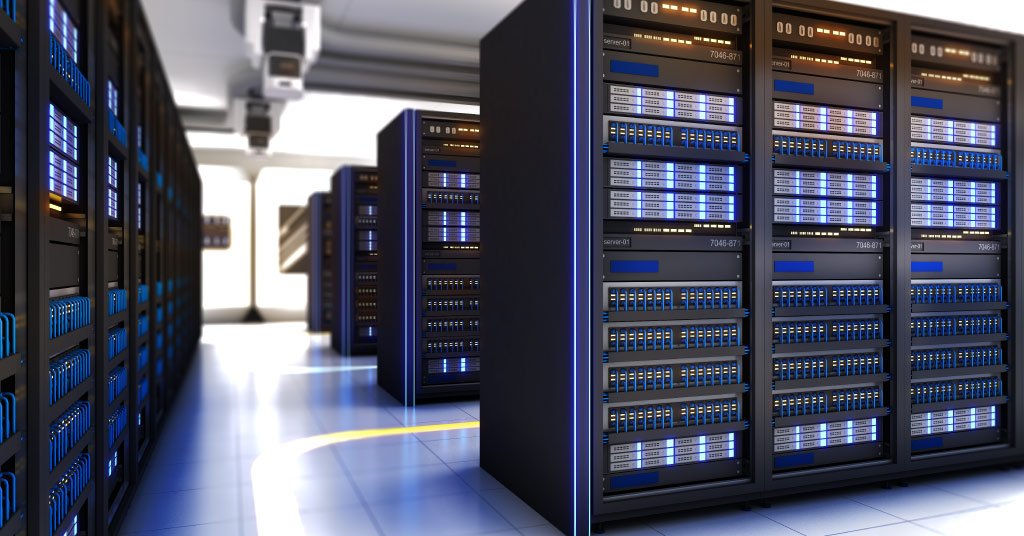
Data center design and infrastructure follow six major codes and standards: Uptime Institute’s Tier Standard, ANSI/BICSI 002-2014, ANSI/TIA 942-A, EN 50600, regulatory standards, and operational standards. Together, they cover everything from redundancy and construction to cabling, security, and day-to-day operations.
As more businesses digitize their data, the demand for data centers keeps rising. A data center is a dedicated facility where data is stored and hosted through servers and other IT equipment, which makes safety and accessibility critical. These codes and standards address that need, covering conceptual design, space planning and expansion, construction, security, and maintenance.
Key Takeaways:
- Uptime Institute’s Tier Standard rates data centers from Tier 1 (99.671% uptime) to Tier 4 (99.995% uptime) based on redundancy.
- ANSI/BICSI 002-2014 covers planning, design, construction, and commissioning across MEP, fire protection, and IT.
- ANSI/TIA 942-A 2014 focuses on cabling and telecommunications infrastructure standards.
- EN 50600 is the international standard, split into seven parts covering construction, power, cooling, cabling, and security.
- Regulatory standards, like HIPAA and SOX, and operational standards, like ISO 27001, govern compliance and daily operations.
What Codes and Standards Apply to Data Center Design?
Although there are specific codes and standards established by national and local authorities, there are certain codes that are popularly followed by data centers globally. These codes can be implemented to save energy, increase costs savings, and data center performance. It can also ensure that your data centers are safe, sustainable, and stay competitive in the market.
Some of the important data center design standards and codes are discussed below:

1. Uptime Institute’s Tier Standard
Uptime Institute introduced the Tier Standards which is a performance-based rating system. Data centers use these standards for designing, construction, and commissioning phases to determine the resilience or performance of the facility with respect to four tiers or levels of redundancy.
The Tier Standards are used by data centers to set up their IT equipment and power needs based on the specified redundancy configurations. There are 4 Tier Standards defined by Uptime Institute.
Tier 1
Tier 1 is a data center with basic infrastructure and IT support. A data center is rated as Tier 1 if it has an uninterrupted power supply, for potential outages or spikes, a space for IT systems, dedicated cooling systems that run at all times, and an engine generator for outages. Tier 1 data centers offer 99.671%.uptime and are well fitted for small enterprises.
Tier 2
Tier 2 data centers offer 99.741%. of uptime and are slightly more advanced than Tier 1 levels. Tier 2 data centers have engine generators, energy storage, chillers, cooling units, UPS modules, pumps, heat rejection equipment, fuel tanks, and cells which essentially improves the performance of systems. Each component can be removed or shut down without interrupting other components for maintenance or repair purposes.
Tier 3
Tier 3 data centers have multiple paths for cooling, power, and IT systems. They are designed to function without interruption even in critical conditions and offer an uptime of 99.982%. With multiple components on standby, tier 3 data centers do not have to be shut down for maintenance or repairs.
Tier 4
Every component in a tier 4 data center has redundancy and is designed to be fault-tolerant. It offers an uptime of 99.995% with several individual and physically isolated systems. These separate systems prevent both systems from being compromised.
The below table specifies the Tier Standards and configurations.

2. ANSI/BICSI 002-2014
American National Standards Institute (ANSI) prescribes the Building Industry Consulting Service International (BICSI) 002-2014. The ANSI/BICSI 002-2014 is a reliable standard for data center design best practices, and it covers vital fields like planning, design, construction, and commissioning of the MEP building trades, fire protection, IT, and maintenance.
BISCI-approved and trained professionals are responsible for assessing and certifying data centers with ratings and reliability assurance.
3. ANSI/TIA 942-A 2014
American National Standards Institute (ANSI) also prescribes the Telecommunication Infrastructure Standard for Data Centers. This covers the standards for cable requirements and network-oriented codes. It also has several redundancy and reliability standards based on the Uptime Institute.
The standards cover and identify ratings for telecommunications and architectural, electrical, and mechanical systems. The TIA certifications are issued by dedicated vendors which can be retained to provide validity and assurance for the facility.
4. EN 50600: An International Standard
The EN 50600 series are a set of international standards that helps in the continuous development of the data center. These standards are adapted from the concepts of UI, TIA, and BCSI standards. The ratings are issued as Availability Classes from 1 to 4.
The standards are distributed as follows:
-
EN 50600-1 General concept
-
EN 50600-2-1 Building construction
-
EN 50600-2-2 Power distribution
-
EN 50600-2-3 Environmental control
-
EN 50600-2-4 Telecommunications cabling infrastructure
-
EN 50600-2-5 Security systems
-
EN 50600-2-6 Management and operational information systems
The EN 50600 series defines the various requirements or the criteria for every aspect of a data center in each of the aforementioned chapters. It defines the requirements for construction, power supply, air conditioning, cabling, security systems, and more.
These standards are valid in Europe and also recognized globally for the standardization and coordination of data centers. The EN 50600 series acts as a guideline for data centers to implement best design practices in their facilities.
5. Regulatory Standards
Regulatory standards are set up by government authorities and local bodies. These regulatory standards are formulated taking into account all the local and national conditions and environment, availability of resources, operational guidelines, maintenance and repair specifications, security features, and more.
These standards are set in place to enable data centers to achieve their maximum performance with efficient utilization of energy and cooling units. It also helps them implement the best data center practices in all aspects.
Some of the standards include:
-
HIPAA – Health Insurance Portability and Accountability Act
-
SOX – Sarbanes-Oxley
-
SAS 70 Type I or II – Statement on Auditing Standards (specifically for service organizations)
-
GLBA – Gramm-Leach-Bliley Act (federally mandated safeguard for sensitive data applied to select industries)
6. Operational Standards
Operational Guidelines are set in place to set regulations and protocols for day-to-day processes and operations in a data center once the facility is built. These standards are useful to ensure that the data center is maintained well and has periodic repairs, especially for critical systems like power and cooling units, and IT systems. The standards also empower data centers with sustainable energy utilization without compromising on the performance and redundancy of data centers.
Here are some operational Standards:
-
Uptime Institute: Operational Sustainability (with and without Tier certification)
-
ISO 9000 – Quality System
-
ISO 14000 – Environmental Management System
-
ISO 27001 – Information Security
-
PCI – Payment Card Industry Security Standard
-
SOC, SAS70 & ISAE 3402 or SSAE16, FFIEC (USA) – Assurance Controls
-
AMS-IX – Amsterdam Internet Exchange – Data Center Business Continuity Standard
-
EN 50600-2-6 Management and Operational Information
FAQs:
1. What are the 4 Uptime Institute Tier levels for data centers?
Tier 1 through Tier 4, ranging from basic infrastructure with no redundancy (99.671% uptime) to fully fault-tolerant, physically isolated systems (99.995% uptime).
2. What’s the difference between ANSI/BICSI 002 and ANSI/TIA 942-A?
ANSI/BICSI 002-2014 covers broader data center design practices, including MEP, fire protection, and IT. ANSI/TIA 942-A focuses specifically on cabling and telecommunications infrastructure standards.
3. Is EN 50600 recognized outside Europe?
Yes. While it’s a European standard, EN 50600 is recognized globally for data center standardization and coordination.
4. What regulatory standards apply to data centers?
Standards like HIPAA, SOX, SAS 70, and GLBA apply depending on the industry and the type of data being stored, since they’re set by government and regulatory bodies rather than the data center industry itself.
5. Why do data centers need both design standards and operational standards?
Design standards ensure the facility is built correctly from the start. Operational standards keep it running reliably afterward, covering maintenance schedules, energy use, and day-to-day protocols for critical systems like power and cooling.
Which Data Center Standard Should You Follow?
The guidelines, standards, and codes ensure that the data center design is up to industry requirements and is reliable. They vary based on the needs of the business. Standards regarding maintenance and operations are implemented to keep the data centers in the prime of their condition and reduce potential downtime.
Data center design standards and codes for infrastructure must be ultimately chosen based on the mission of the data center. Compatibility with international codes and standards and local standards can be rightfully chosen based on the nature of business and its scale.
Mechartes data center design consultants can help you understand your business needs and make recommendations for data center design. They can also provide assistance on infrastructure standards and requirements for your data center.
Reach out to us for data center design standard consultation.

 Share
Share  facebook