Most data centre cooling issues aren’t random. After working across projects in the Middle East, Africa, Europe, and the US, the same problems keep appearing at different facilities, at different scales. The equipment varies, the layouts differ, but the failure modes are familiar.
What’s consistent is that these problems don’t show up on design drawings. They show up in simulation, or in operation, when it’s too late to fix them cheaply.
These aren’t edge cases. They’re patterns, and they appear often enough across data centre projects that they’re worth understanding before a design is finalised.
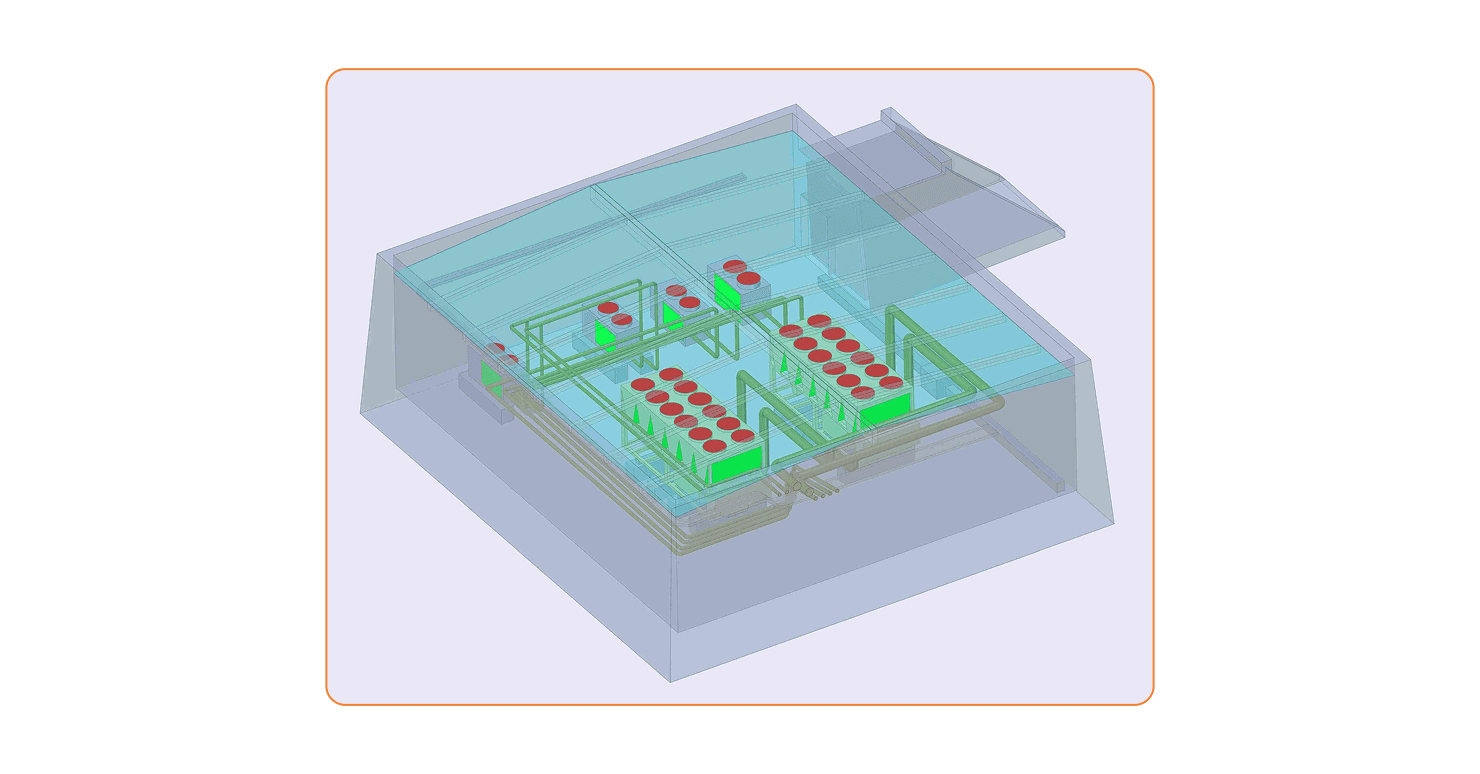
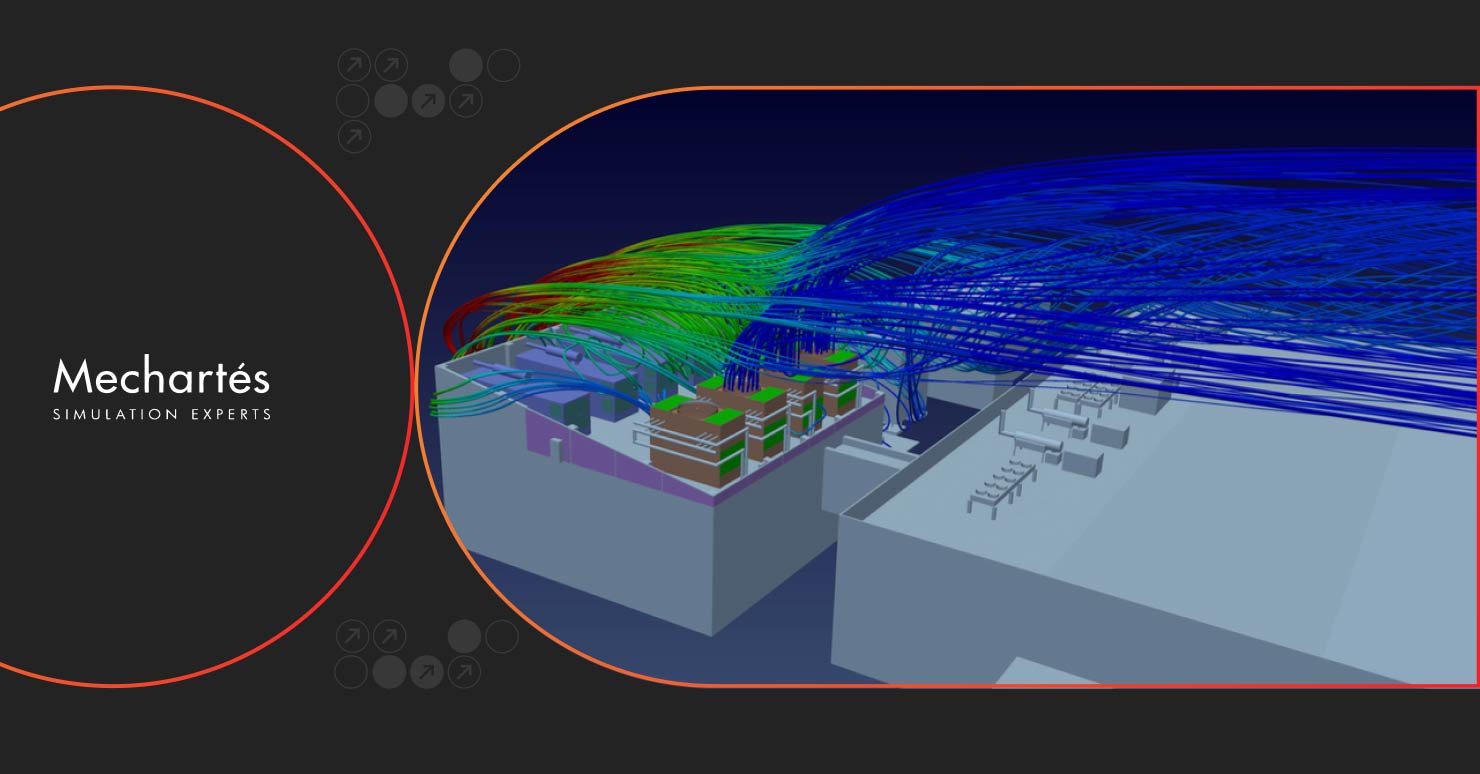
Chiller yard recirculation is one of the most common findings in external CFD work on data centres. Discharged air from condenser fans finds its way back to the chiller inlets, raising the inlet temperature and forcing the chillers to work harder than the design assumed.
The consequences are straightforward: COP drops, energy consumption increases, and equipment life shortens. What makes recirculation difficult to predict without simulation is that it varies with wind direction, ambient conditions, and yard layout. A yard that performs well under one wind condition can behave differently under another. Hand calculations can’t account for this. CFD routinely identifies recirculation paths that aren’t visible from the layout alone.

Uneven airflow from raised floor tiles is the most common finding in data hall CFD work. The designed cold air delivery path and the actual path the air takes are often different, and cold air doesn’t reach every rack inlet as intended.
The fix, once identified, is usually straightforward. Tile placement adjustments, blanking panels, or containment modifications resolve most hotspot issues without significant cost. The problem is that without CFD, you don’t know exactly where the maldistribution is occurring or what’s driving it. Thermal hotspots in active racks are the symptom; the root cause can be anywhere in the underfloor distribution network.

UPS rooms, LV/MV switchgear rooms, and electrical rooms rarely receive the same CFD attention as the white space. The data hall gets modelled thoroughly; the rooms supporting it often don’t.
This is a gap worth closing. Equipment failures in secondary rooms can take down the entire facility regardless of how well the data hall itself is designed and cooled. The ventilation requirements in these spaces are different from the white space, but the consequences of getting them wrong are just as serious. Including secondary rooms in the CFD scope at the design stage costs relatively little compared to the risk of leaving them unvalidated.

Most cooling designs are validated under normal operating conditions. That’s necessary but not sufficient. The more useful question is what happens when something fails.
Transient CFD simulations model scenarios like a CRAH unit trip or a mains-to-generator transfer, where cooling capacity drops temporarily while the load remains. These simulations show how quickly temperatures rise, which racks become vulnerable first, and whether the design has enough thermal resilience to ride through the event without equipment damage. Designing to normal operation and assuming failure modes will be acceptable is a risk that simulation removes.
The problems above aren’t theoretical. On a chiller yard CFD study completed for a data centre in the Middle East, analysis found that 30.5 to 44.6% of discharged condenser air was recirculating back to the chiller inlets. The air entering the chillers was 6.12°C above ambient temperature, a significant penalty on COP and operating cost that the original layout hadn’t anticipated.
The recommended changes included increasing louver opening sizes, adjusting stack heights, and installing canopies between chillers. None of these were major structural interventions, but finding the need for them through simulation rather than during commissioning made the difference between a design modification and an operational problem.
This is the consistent value of CFD at the design stage: the findings aren’t usually surprising in hindsight, but they’re invisible without simulation.
The four problems described here are drawn from real projects. None of them are unusual, and none are inevitable with the right analysis in place early.
The common thread is timing. CFD at the design stage, before equipment is specified and layouts are fixed, gives engineers the information to make changes when they’re inexpensive. The same findings during commissioning or in operation are a very different conversation.
At Mechartes, our data centre practice covers CFD analysis for data halls, external chiller yards, secondary rooms, and failure mode scenarios, across projects in the Middle East, US, Europe, and Africa. If you’re at the design stage and want to understand what simulation can validate before decisions get expensive to change, get in touch.